Sam Lange · 12 September 2026
Caliva's Underground Mycelium Networks Spark Biotech Partnerships in Remote Valleys
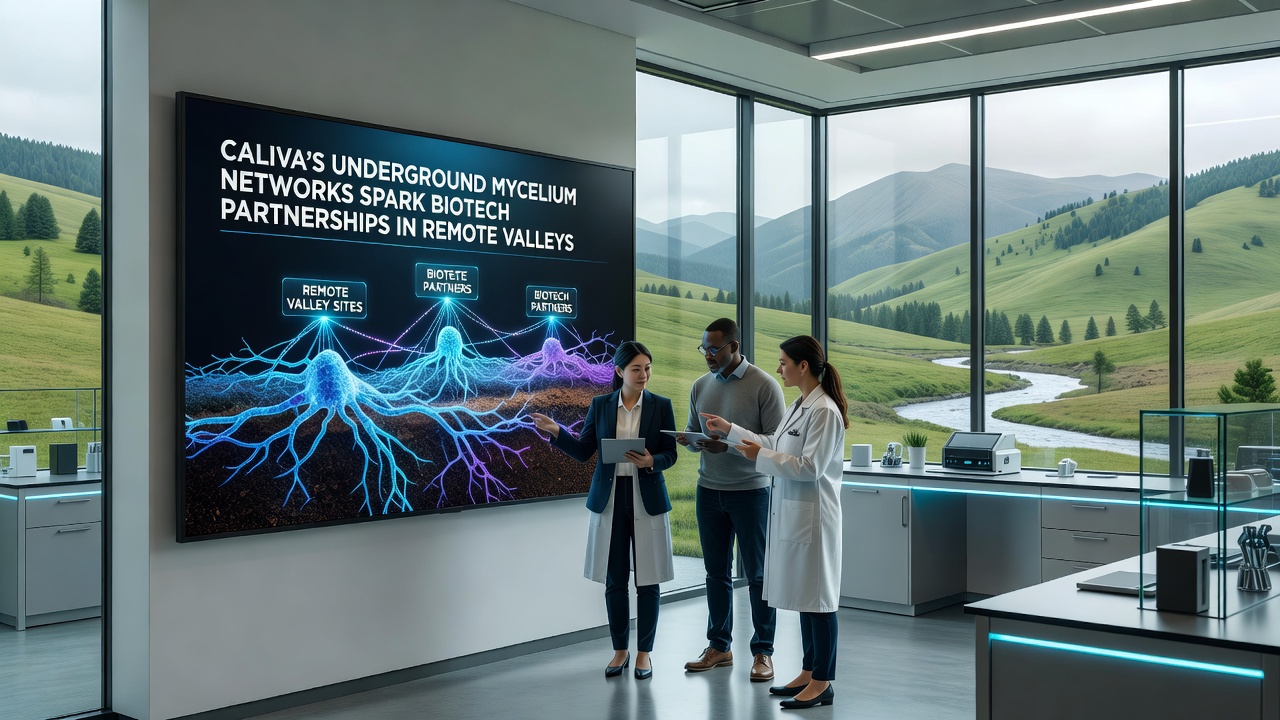
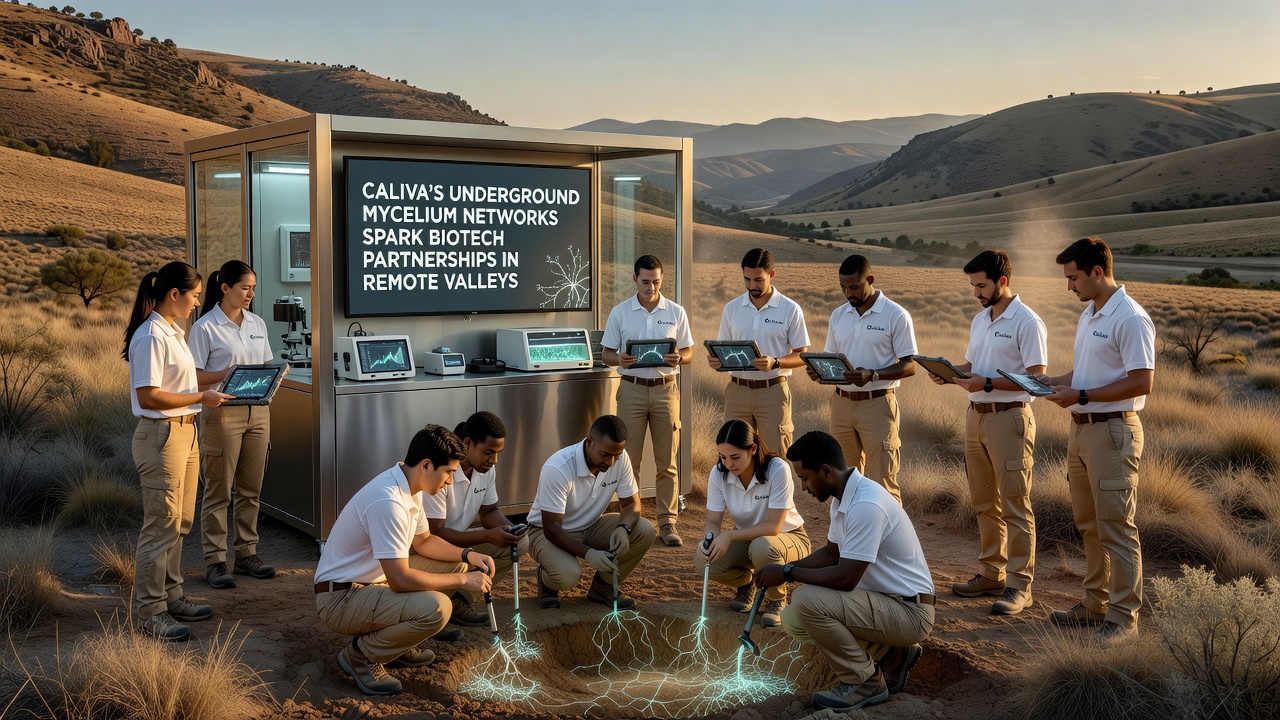
Caliva's remote valleys host extensive underground mycelium networks that researchers have mapped since early field surveys began in 2024, and these fungal systems now connect local sites with international biotech firms through formal partnerships announced in September 2026. Data from soil sampling programs shows dense hyphal structures spanning several kilometers beneath valley floors, while laboratory analysis reveals compounds with potential applications in material science and pharmaceutical development. Partnerships formed after initial findings circulated among academic groups in Europe and North America, leading companies to establish field stations near valley access points for ongoing monitoring and extraction trials.
Mapping the Networks and Initial Findings
Survey teams from regional universities deployed sensor arrays and drone-assisted imaging to chart mycelium growth patterns across multiple valley sites, and results indicated that certain species form interconnected webs capable of nutrient transfer over long distances. Figures released by the European Mycology Consortium in 2025 documented biomass densities exceeding 200 kilograms per cubic meter in core zones, whereas comparative studies from Australian research stations noted similar structural traits in temperate zones. These observations prompted biotech groups to request access agreements with valley landowners, and contracts signed in mid-2026 outlined joint extraction protocols that limit surface disturbance while allowing sample collection for compound screening.
Biotech Partnerships and Research Collaborations
Three major firms based in different regions entered agreements with valley cooperatives during the September 2026 round of announcements, and each partnership focuses on distinct applications derived from mycelium extracts. One collaboration centers on biodegradable polymers for packaging, while another examines antimicrobial agents identified through genomic sequencing of network samples. A third group explores enzyme production pathways that could support industrial fermentation processes, and preliminary trial data shared at a conference in Canada showed enzyme activity levels comparable to established commercial strains. Observers note that these arrangements include provisions for technology transfer back to local communities, including training programs on sample handling and basic laboratory techniques.
Economic and Environmental Context in the Valleys
Valley communities previously relied on seasonal agriculture and limited tourism, yet the emergence of mycelium-related projects has introduced new revenue streams through lease agreements and service contracts. Government records from the regional development office list 12 active field stations operating as of September 2026, each employing between five and fifteen local residents for logistical support and data recording. Environmental monitoring reports compiled by an independent Australian institute confirm that extraction methods used under the partnerships maintain soil stability indicators within baseline ranges recorded prior to 2024, and no measurable changes in surface vegetation cover have appeared in satellite comparisons through late 2026. These outcomes align with guidelines issued by the International Society for Fungal Conservation, which emphasize minimal-impact sampling in sensitive ecosystems.
Technical Approaches and Data Collection
Teams employ a combination of ground-penetrating radar and metagenomic sequencing to track network dynamics across seasons, and results feed into shared databases accessible to all partner organizations. One study published through a Canadian university platform detailed seasonal shifts in mycelium density that correlate with precipitation patterns, while another analysis from an EU-funded project identified over 150 distinct fungal taxa within a single valley transect. Equipment upgrades scheduled for 2027 include automated sampling drones that reduce manual labor requirements, and funding for these upgrades comes from pooled contributions outlined in the original partnership documents. Data transparency requirements built into the agreements ensure quarterly reports reach both corporate and public archives, allowing external researchers to review findings without direct site access.
Future Developments and Monitoring
Additional valley sites remain under evaluation for expanded mapping efforts, and preliminary geophysical surveys suggest comparable network structures extend into adjacent ranges. Partnership terms require annual environmental audits conducted by third-party contractors, and the first full-cycle audit scheduled for 2027 will assess long-term effects on water tables and microbial diversity. Industry reports from participating firms project that scaled production of mycelium-derived materials could begin within five years if current trial yields hold steady, though regulatory approvals in target markets will determine final timelines. Local training initiatives continue to expand, with certification courses now offered through a partnership with a North American technical institute that focuses on field data management and basic molecular techniques.
Conclusion
Caliva's underground mycelium networks have transitioned from scientific curiosity to structured biotech resource through partnerships formalized in September 2026, and ongoing data collection supports continued evaluation of applications in materials and medicine. Valley communities participate via lease and employment arrangements, while monitoring protocols maintain environmental baselines established before commercial involvement. Research outputs from these sites now contribute to broader databases used by institutions across multiple continents, and future phases will depend on results from the 2027 audits and subsequent production scaling decisions.